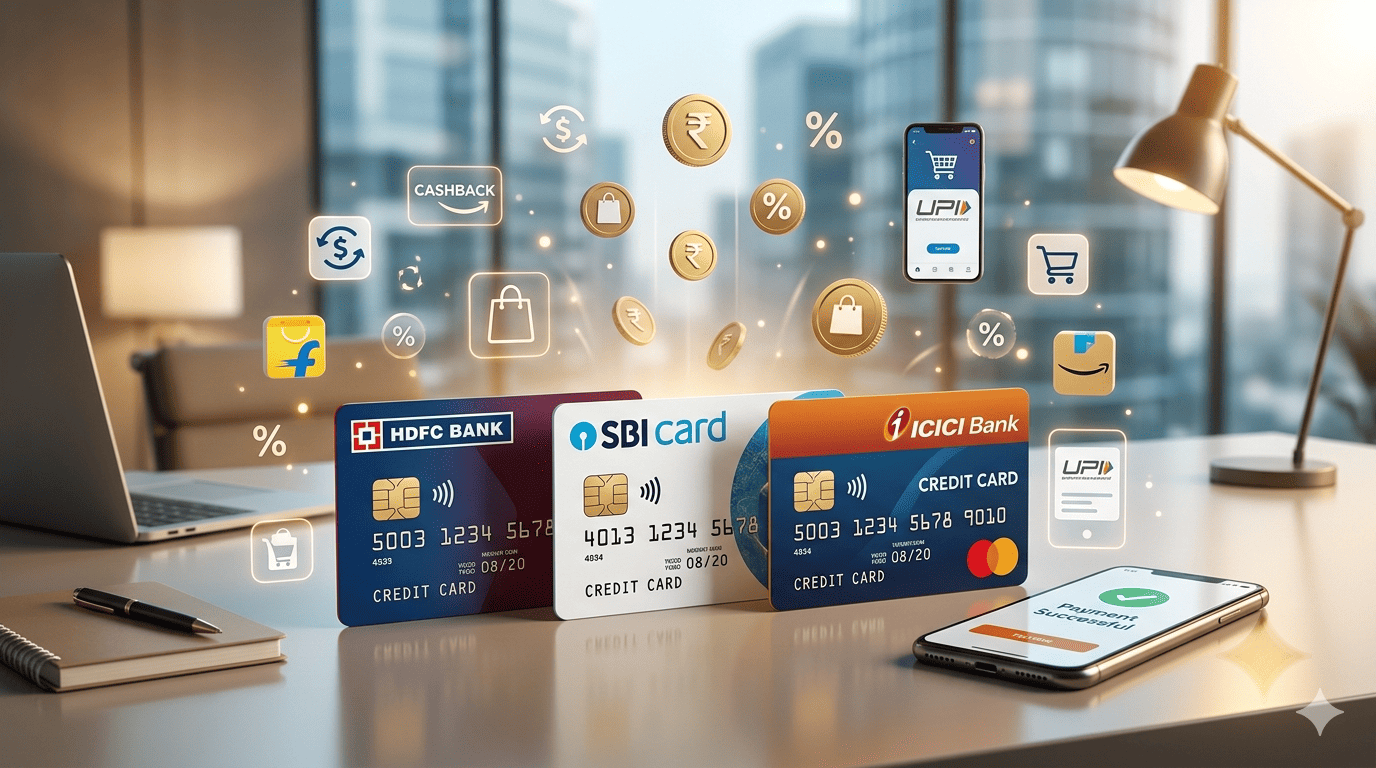
A few months back, I was sitting with three credit card offers open on my laptop — HDFC, SBI, and ICICI. All of them looked “best” on paper. Cashback here, rewards there, discounts everywhere.
But when I actually tried to pick one, I got stuck.
Because the real confusion starts when banks don’t explain how these cards behave in real life. Not in brochures… but in daily usage like Amazon orders, UPI payments, Flipkart sales, Swiggy dinners, and random online subscriptions.
So I ended up doing something simple — I used all three types of cards over time (mine and friends/family), and noticed how they actually perform in real shopping life.
And honestly, the difference is bigger than most people think.
The first mistake I made: trusting brand names instead of usage style
When I first started, I thought:
- HDFC = premium, so best
- SBI = government trust, so safe
- ICICI = modern banking, so flexible
Reality is different.
A credit card is not about the bank name — it’s about where you spend money.
Once I understood this, everything became clearer.
Quick reality check: what each bank is actually good at
Before going deep, here’s the honest breakdown I noticed after using them in real situations:
- HDFC cards → Best for structured rewards + regular monthly spending
- SBI cards → Best for flat cashback on online shopping
- ICICI cards → Best for simple, no-stress beginner-friendly usage
Now let’s break it down properly.
1. HDFC Credit Cards – powerful but a bit “planned”
I started with an HDFC Millennia-type setup (similar reward structure), and the first thing I noticed was this:
You need to understand categories to get full benefit.
What I liked:
- Good cashback on Amazon, Flipkart, Swiggy, Zomato
- Stable rewards system
- Reliable app experience (HDFC Mobile Banking)
- Works well for monthly planners
What I didn’t like at first:
- Cashback limits (you don’t notice until you hit them)
- Reward points instead of direct cashback in some cards
- Confusing redemption system for beginners
Real-life example:
I used it for my monthly spending — groceries, food delivery, online shopping. It worked well, but I had to keep track of categories to avoid missing rewards.
Best for:
People who spend regularly and don’t mind tracking categories a bit.
2. SBI Credit Cards – simple, direct, and surprisingly powerful
SBI Cashback Credit Card was the one that changed my perspective completely.
Why? Because it removed thinking.
No category confusion. No complicated reward points.
What stood out:
- Flat cashback on online shopping (Amazon, Flipkart, etc.)
- Works across multiple websites
- No need to “optimize spending”
- Very straightforward structure
Real-life moment:
I remember buying phone accessories and random gadgets from different websites. I didn’t even think about categories — and still got cashback.
That simplicity is underrated.
What I didn’t like:
- Cashback caps (important — people often ignore this)
- Not many premium lifestyle benefits
Best for:
People who shop online frequently and want zero mental load.
3. ICICI Credit Cards – smooth, beginner-friendly experience
ICICI is like that friend who doesn’t complicate things.
When I used Amazon Pay ICICI Credit Card, the experience felt effortless.
What I liked:
- Lifetime free (in most cases)
- Instant cashback into Amazon Pay balance
- Super simple usage
- Great for beginners
Real example:
I ordered groceries and electronics from Amazon. Cashback was instantly visible in Amazon Pay — no waiting, no calculations.
That instant feedback actually makes you feel like you’re saving money.
What I didn’t like:
- Mostly Amazon-focused benefits
- Not very powerful outside ecosystem
- Limited “advanced” reward strategies
Best for:
Beginners and Amazon-heavy shoppers.
Side-by-side real comparison (based on actual usage feel)
Instead of theory, here’s how it feels in real life:
HDFC:
Feels like a “smart planner card”
You get rewards, but you need to manage them.
SBI:
Feels like a “set and forget cashback card”
Just spend and get money back.
ICICI:
Feels like a “beginner-friendly savings card”
Simple and smooth, but platform-specific.
Step-by-step: how to choose the right one (what actually worked for me)
If I had to restart today, I would follow this simple process:
Step 1: Check your main shopping platform
- Amazon → ICICI Amazon Pay
- Mixed shopping → SBI Cashback
- Monthly structured spending → HDFC
Step 2: Don’t chase multiple cards at once
I made this mistake. Applying for 2–3 cards together reduces approval chances.
Step 3: Ignore “extra benefits” initially
Airport lounges, insurance, travel perks — leave them for later. Focus on cashback first.
Step 4: Start with ONE card only
Use it for 2–3 months and track real savings.
Common mistakes I personally learned the hard way
1. Ignoring cashback caps
I once thought I was earning unlimited cashback… until I hit the monthly limit.
2. Missing due dates
One late payment wiped out a month’s rewards due to interest.
3. Choosing cards based on ads
Big marketing doesn’t always mean better real-world value.
4. Overcomplicating rewards
The more complicated the system, the less you actually benefit.
Real monthly spending example (to make it practical)
Here’s a simple breakdown of how these cards perform in real life:
- Amazon shopping: ₹5,000
- Flipkart shopping: ₹4,000
- Food delivery: ₹3,000
- Subscriptions & bills: ₹2,000
Total: ₹14,000/month
Depending on the card:
- ICICI → simple cashback on Amazon
- SBI → flat cashback across platforms
- HDFC → category-based optimized rewards
Average savings I noticed: ₹400 to ₹1,000/month if used correctly.
It doesn’t sound huge, but over a year it becomes real money.
Which one is actually “best”?
There is no single winner here.
After using and observing all three, here’s the honest answer:
- If you want simplicity → SBI Cashback wins
- If you shop mostly on Amazon → ICICI wins
- If you want structured rewards and optimization → HDFC wins
The mistake most people make is trying to find one perfect card.
But the real trick is matching the card with your lifestyle.
Final thoughts
Credit cards in India are not just banking products anymore. They’re basically small savings tools if used correctly.
What I learned through trial and error is simple:
The “best card” is not the one with the most features — it’s the one that fits your spending habits without forcing you to think too much.
Once that clicks, you stop chasing offers and start actually saving money quietly in the background.