I still remember a moment when a friend messaged me at night saying, “Yaar, credit card chahiye but salary slip nahi hai… bank mana kar raha hai.”
And honestly, that situation is more common than people think.
A lot of students, freelancers, small business owners, or even people working in cash-based jobs hit the same wall: banks asking for income proof before issuing a credit card. At that point it feels like you need a credit card to build credit history, but you also need credit history to get a credit card. Kind of a frustrating loop.
But after seeing how different banks actually work in real life (and testing a few options myself and with people around me), I realized there are practical ways to get a credit card without traditional income proof. You just need to know where to look and how the system actually evaluates you.
Let’s break it down in a simple, real-world way.
First, understand what banks actually want (it’s not just salary slips)
Most people think income proof is the only thing that matters. It’s not.
Banks mainly want one thing: confidence that you can repay money on time.
Income slip is just one way to measure that. But there are other signals they consider:
- Your savings or fixed deposit history
- Relationship with the bank (account activity)
- Existing loans or repayments
- Credit score (if you already have one)
- Collateral or deposit security
Once you understand this, the whole process becomes less intimidating.
Option 1: Secured Credit Card (the easiest and most reliable way)
If I had to suggest one method that almost always works without income proof, it’s this.
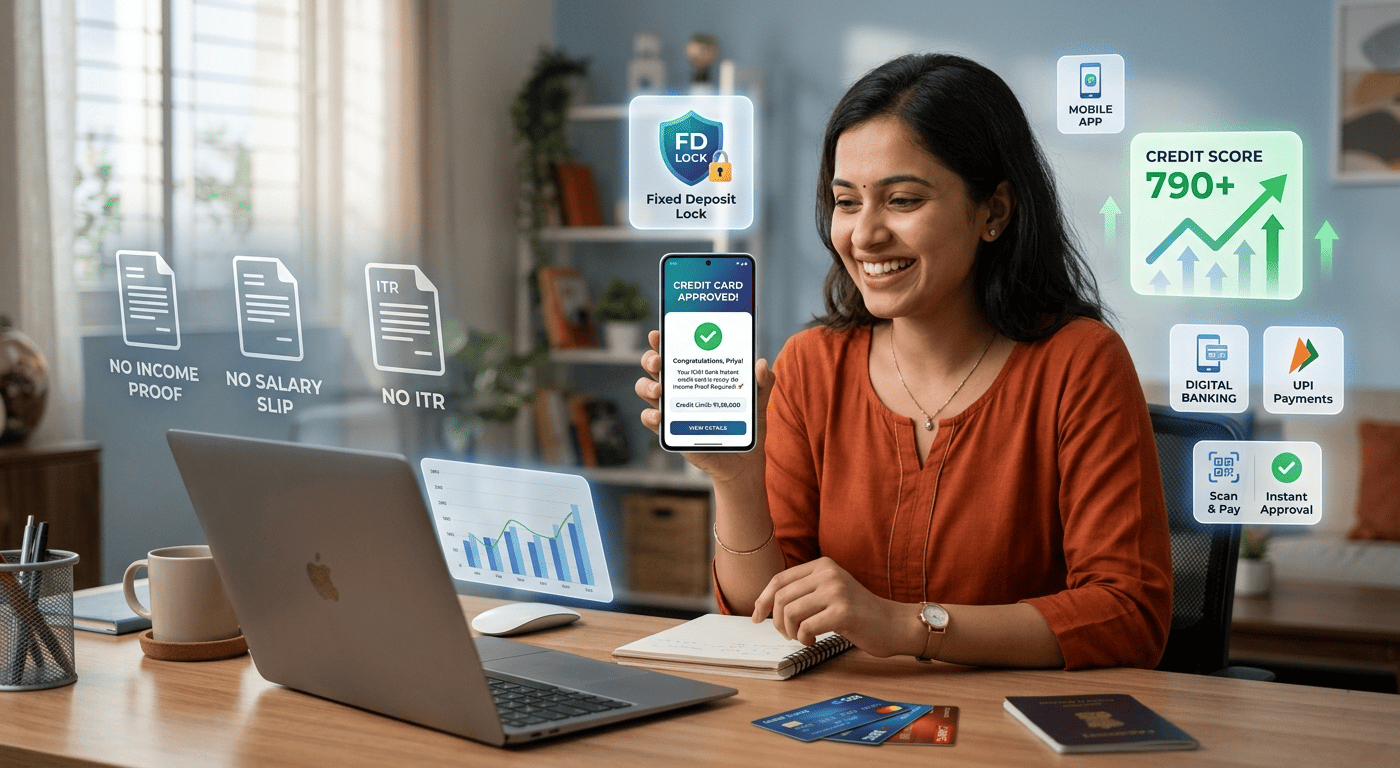
A secured credit card is backed by a Fixed Deposit (FD). You deposit money in the bank, and they issue a credit card against it.
For example:
- You open an FD of ₹10,000–₹50,000
- The bank gives you a credit card with a limit (usually 80–90% of FD)
- You use it like a normal credit card
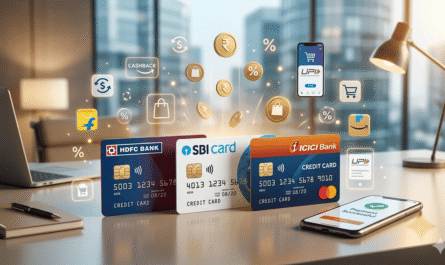
Banks like:
- State Bank of India
- HDFC Bank
- ICICI Bank
offer secured cards easily through their branches or apps.
Why this works so well
Because the bank has zero risk. Even if you default, they already have your deposit.
Real-life observation
I’ve seen students start with this method, use the card for small expenses like mobile recharge or OTT subscriptions, and within 6–8 months, their credit score starts building properly.
Option 2: Student Credit Cards (for beginners with no income)
Some banks offer special cards designed for students or first-time users.
These cards usually don’t require income proof but may ask for:
- College ID
- Age proof
- Basic bank account
- Sometimes a small fixed deposit
These cards often come with low limits, but they’re enough to start building credit history.
The idea is simple: banks are betting on your future earning potential rather than current income.
Option 3: Add-on Credit Cards (hidden opportunity many people ignore)
This is something I personally think is underrated.
If your parents or spouse already has a credit card, you can request an add-on card.
How it works:
- Main cardholder applies for an additional card in your name
- You get a separate card linked to their account
- Spending is billed to the main card
No income proof needed.
Real example
A friend of mine started using his father’s add-on card while freelancing. After 1 year of responsible usage, he got his own independent card without showing salary slips.
Option 4: Relationship-based approval (your bank matters more than income sometimes)
This is something most people underestimate.
If you have a savings account and regularly use it, banks start trusting you over time.
What helps:
- Regular deposits and withdrawals
- Maintaining balance
- Using debit card frequently
- Paying bills through same bank
Banks slowly build a profile of you.
After a few months, they may offer:
- Pre-approved credit cards
- Instant card offers in mobile apps
- Special invite-based cards
I’ve personally seen this happen more often with digital banking apps where your spending behavior is tracked.
Option 5: Freelancers and self-employed users (income proof workaround)
If you don’t have salary slips but still earn money, you’re not out of options.
Banks may accept:
- Bank statements (last 6–12 months)
- UPI transaction history
- Freelance invoices
- GST registration (if applicable)
Even if you don’t have “official salary,” your cash flow matters.
A lot of freelancers I know started by showing their PayPal/Payoneer or local bank inflows instead of traditional proof.
Option 6: Fintech and instant credit card alternatives
Some digital platforms now offer easier entry-level cards based on behavior instead of strict documents.
Apps like:
- Slice
- Uni Card
(availability may change over time)
These platforms often focus on:
- Spending patterns
- Bank account activity
- Phone verification and basic KYC
They’re not traditional banks, but they helped a lot of first-time users enter the credit system.
Step-by-step: How I would approach it if I had no income proof today
If someone asked me from scratch, I’d suggest this simple path:
Step 1: Open a bank account (if you don’t already have one)
Preferably with a bank that offers easy credit card upgrades later.
Step 2: Start building activity
Use debit card, UPI, and maintain regular transactions.
Step 3: Create a small Fixed Deposit (if possible)
Even ₹5,000–₹10,000 is enough to start.
Step 4: Apply for a secured credit card
This is the fastest approval route.
Step 5: Use it responsibly
- Keep usage under 30% limit
- Pay full bill every month
- Avoid late payments
Step 6: After 6–12 months
You can request:
- Unsecured credit card upgrade
- Higher limit
- Better reward cards
Common mistakes people make (and regret later)
I’ve seen people ruin their chances simply because they didn’t understand how credit works.
1. Applying randomly everywhere
Every rejection hits your credit profile.
2. Not reading card terms
Some cards have hidden fees or FD lock-in rules.
3. Maxing out the card
Using 90–100% of limit regularly looks risky to banks.
4. Missing payments
Even one missed payment can damage your credit score badly.
5. Expecting instant high limits
Credit building is slow. Banks trust consistency, not speed.
Real talk: What actually works long-term
If you remove all shortcuts and hype, the truth is simple:
- Secured credit cards are the safest entry point
- Good banking behavior matters more than income proof
- Time builds trust with banks
- Credit score is more powerful than salary slips
Once you enter the system properly, everything becomes easier—loan approvals, higher limits, better rewards, and even premium cards.
A final practical mindset shift
Most people think:
“No income proof = no credit card”
But in reality, banks think like this:
“If I can see stability and repayment ability, income proof is optional.”
Once you understand this difference, you stop chasing approval randomly and start building a profile that banks actually trust.
And that’s usually where people finally get their first card—even without a salary slip.