I still remember sitting in a small college canteen when one of my friends proudly showed his “first credit card approval” email. He was smiling like he had unlocked some kind of premium lifestyle.
Two weeks later, the same guy was worried because his ₹1,200 Swiggy orders, ₹3,000 Amazon gadgets, and random late-night shopping had turned into a bill he didn’t fully understand.
That’s usually how credit cards enter student life in India — excitement first, confusion later.
And honestly, I’ve seen this pattern enough times to realize something important: for students, the “best credit card” is not about offers or fancy benefits. It’s about control, simplicity, and learning how money actually moves.
Why students even think about credit cards (and why that’s not wrong)
Most students don’t wake up thinking about credit scores. It usually starts like this:
- Online shopping on Amazon or Flipkart
- Food delivery apps like Swiggy and Zomato
- OTT subscriptions
- Small emergency expenses
Then someone says:
“Credit card le lo, cashback milta hai.”
And that’s where curiosity begins.
If used carefully, a credit card can actually help students:
- Build a credit history early
- Learn budgeting in real life
- Handle small expenses without borrowing
- Understand repayment discipline
But the key is how you use it, not just which card you pick.
My early mistake: thinking rewards matter most
When I first explored student-friendly cards, I made a classic mistake.
I focused on cashback and discounts.
But later I realized something:
students don’t fail because of lack of rewards… they struggle because of lack of control.
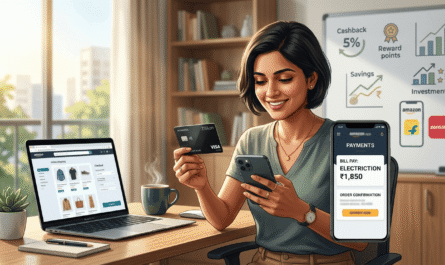
Even a 5% cashback card becomes useless if:
- You miss payment dates
- You overspend during sales
- You don’t understand billing cycles
So I started looking at cards differently — not as “earning tools,” but as “learning tools.”
Best Credit Cards for Students in India (real-world perspective)
Instead of listing everything available in the market, I’ll keep this practical — based on ease of use, approval chances, and how beginner-friendly they actually feel.
1. ICICI Amazon Pay Credit Card – simplest starting point
If I had to recommend one card to a student starting today, this would be it.
Why it works:
- Lifetime free (no annual fee pressure)
- Very simple cashback structure
- Easy to understand even for beginners
- Direct benefit on Amazon purchases
Real-life student usage:
Think about a typical student shopping pattern:
- Books for college
- Mobile accessories
- Hostel essentials
- Occasional electronics
This card fits that lifestyle perfectly.
Cashback usually goes directly into Amazon Pay balance, so you actually see your savings immediately.
That instant feedback is surprisingly helpful when you’re learning money management.
Limitation:
- Mostly useful if you shop on Amazon
- Not a “universal” cashback card
2. SBI Cashback Credit Card – the “no thinking required” option
This card is popular for one simple reason: it removes confusion.
Why students like it:
- Flat cashback on online spending
- Works across multiple platforms
- No complicated reward conversion
- Simple structure overall
Real-world feel:
I noticed that students who use this card don’t overthink categories.
Whether it’s:
- Flipkart order
- Food delivery
- Random online tools
They just spend normally and get cashback.
The downside:
- Cashback limits exist
- You need to track monthly usage
Best for:
Students who want simplicity and don’t want to learn reward systems in detail.
3. HDFC Millennia Credit Card – structured learning experience
This is slightly more “organized” compared to the others.
Why it stands out:
- Cashback on major platforms (Amazon, Flipkart, Swiggy, Zomato)
- Good for monthly spending habits
- Reliable banking system and app support
Real-life observation:
Students who use HDFC cards tend to become more conscious of their spending because they start tracking categories.
At first, it feels a bit complicated. But later, it actually helps build discipline.
Challenge:
- Category rules can be confusing initially
- Cashback caps apply
Best for:
Students who already have some financial awareness or part-time income.
4. Secured Credit Cards (FD-backed cards like Kotak 811 or similar)
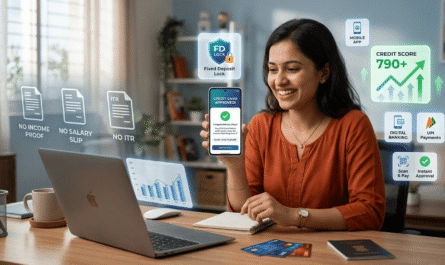
This is something many students ignore — but it’s actually one of the safest entry points.
How it works:
- You keep a fixed deposit
- Bank issues a credit card against it
- You use it like a normal card
Why it’s important:
Even if a student has:
- No income
- No credit history
They can still start building a credit score safely.
Real benefit:
No pressure of rejection + controlled spending limit.
Best for:
Beginners who want zero risk entry into credit system.
Step-by-step: how a student should start using a credit card
This is more important than the card itself.
Step 1: Choose only one card
Don’t apply for multiple cards at the same time. It creates confusion and can reduce approval chances.
Step 2: Use it for fixed small expenses
Start with:
- Mobile recharge
- OTT subscriptions
- Small online purchases
Not big shopping sprees.
Step 3: Track billing cycle properly
Use:
- Bank apps (ICICI, HDFC, SBI apps)
- Google Pay transaction tracking
- Cred (only for tracking, not spending encouragement)
Step 4: Always pay full bill
Never carry forward balance. This is where most students get into trouble.
Step 5: Treat it like debit card
This mindset is everything.
Common mistakes students make (I’ve seen these repeatedly)
1. Thinking credit card = extra money
This is the biggest misunderstanding.
2. Ignoring due dates
Even one missed payment can impact credit score early on.
3. Applying for too many cards
More cards ≠ more benefits. It usually creates chaos.
4. Overspending during sales
Big sale events are where most budget mistakes happen.
5. Not checking statements
Many students don’t even review monthly bills properly.
Real example: simple student usage scenario
Let’s take a realistic monthly budget:
- Food delivery: ₹2,000
- Online shopping: ₹1,500
- Subscriptions: ₹1,000
- Misc expenses: ₹500
Total: ₹5,000/month
With a basic cashback card:
- 3%–5% return = ₹150–₹250/month
It doesn’t sound huge, but:
₹150 × 12 months = ₹1,800/year saved
- credit score built
- financial discipline learned
That’s the real long-term benefit.
Which credit card is actually best for students?
There is no universal winner, but here’s the practical breakdown:
- Amazon-heavy users → ICICI Amazon Pay Credit Card
- Simple cashback seekers → SBI Cashback Credit Card
- Balanced monthly spenders → HDFC Millennia
- No income beginners → Secured FD-backed card
The best card is simply the one that matches your spending style without pressure.
Final thoughts
Most students don’t struggle with credit cards because they’re “bad tools.” They struggle because nobody explains how they actually behave in real life.
A credit card is not meant to increase spending power. It’s meant to teach responsibility while giving small financial benefits along the way.
If you start slow, keep spending controlled, and treat it like a learning tool instead of a lifestyle upgrade, it can actually be one of the most useful financial habits you build early in life.